


Creating a sustainable business model is no longer a niche concern but a fundamental requirement for long-term success and resilience. It transcends mere environmentalism, encompassing financial viability, social responsibility, and ecological stewardship – the triple bottom line. Building such a model requires a deliberate journey, starting with a core idea rooted in solving a real problem while consciously integrating sustainability principles from the very outset. This means envisioning not just a product or service, but a system that creates enduring value for stakeholders, minimizes negative impacts, and operates within planetary boundaries, ensuring the business can thrive for decades, not just quarters.
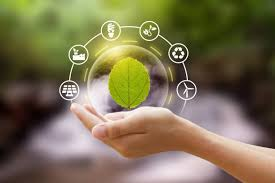
The ideation phase is where the seeds of sustainability are sown. Entrepreneurs must ask critical questions: What problem are we solving, and for whom? How can our solution create positive social or environmental impact alongside profit? This involves rigorous market research to identify unmet needs and opportunities where sustainability offers a competitive advantage, such as reducing waste, improving resource efficiency, or serving underserved communities. Crucially, it requires defining clear sustainability goals aligned with the business purpose, whether it’s achieving carbon neutrality, ensuring fair labor practices throughout the supply chain, or designing products for circularity. Embedding these goals into the core value proposition ensures sustainability isn’t an add-on but the engine of the business.
Validation is the critical bridge between concept and reality, testing both market demand and the feasibility of the sustainable model. This goes beyond proving customers will buy; it involves rigorously assessing the unit economics with sustainability costs factored in. Can the business be profitable while paying fair wages, sourcing ethical materials, or investing in renewable energy? Prototyping, pilot programs, and minimum viable products (MVPs) are essential tools. During this phase, engaging potential customers, suppliers, and impact investors provides invaluable feedback on the viability and appeal of the sustainable approach. It’s also the time to map potential risks – supply chain vulnerabilities, regulatory changes, resource scarcity – and develop mitigation strategies, ensuring the model is robust and adaptable.

Scaling a sustainable business presents unique challenges and opportunities. Growth cannot come at the expense of core values. This requires embedding sustainability into operational DNA: implementing efficient, low-waste processes, building transparent and ethical supply chains, investing in employee well-being, and continuously measuring environmental and social impact using relevant metrics. Technology plays a vital role, enabling better resource tracking, remote collaboration to reduce travel, and innovative solutions for circularity. Financing must also align, seeking impact investors or green loans that understand and support the long-term sustainable vision. Crucially, scaling involves maintaining a strong company culture that prioritizes purpose and ethical decision-making, even as the organization grows larger and more complex.

Ultimately, building a sustainable business model is an ongoing journey, not a destination. It demands constant innovation, adaptation, and a commitment to measuring and improving performance across all three bottom lines. By starting with a purpose-driven idea, rigorously validating its sustainable viability, and scaling with integrity and operational efficiency, businesses can create models that are not only profitable and resilient but also contribute positively to society and the planet. This holistic approach is the cornerstone of enduring success in the 21st-century economy, proving that doing good and doing well are intrinsically linked.
About The Author