


Artificial Intelligence (AI) is gradually changing the face of education across the world. What once sounded like distant future technology is now quietly becoming part of everyday classroom learning. From helping students understand complex topics to supporting teachers in managing lessons, AI is reshaping how knowledge is delivered, absorbed, and applied.

In many schools today, learning is no longer limited to textbooks, chalkboards, and traditional lectures. Instead, digital tools powered by AI are introducing new ways of learning that are faster, more interactive, and increasingly tailored to individual students. This shift is not replacing education as we know it, but rather enhancing it in ways that were not possible before.
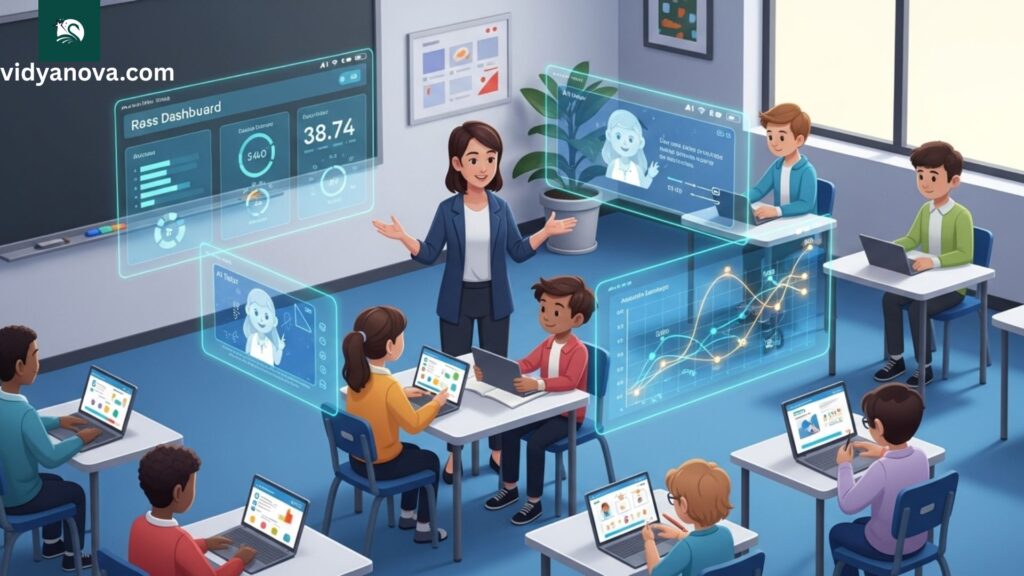
One of the most noticeable changes is the rise of personalized learning. In a typical classroom, students often learn at the same pace, even though their understanding levels differ. Some grasp concepts quickly, while others need more time and practice. AI helps bridge this gap by adjusting content to suit individual learners. A student who is struggling with a topic can receive simpler explanations and extra exercises, while a more advanced learner can be challenged with higher-level tasks. This creates a more balanced and inclusive learning environment where each student progresses at a suitable pace.

Another major improvement brought by AI is the speed of learning and feedback. Traditionally, students would complete assignments and wait for teachers to mark them before understanding their mistakes. With AI-powered tools, feedback is almost instant. Learners can immediately see where they went wrong and receive explanations on how to improve. This quick correction process strengthens understanding and helps students build confidence as they learn.
AI is also making learning more engaging. Today’s students are surrounded by technology in their daily lives, and education is beginning to reflect that reality. Interactive learning platforms, educational chatbots, virtual tutors, and simulation-based lessons are making classrooms more dynamic. Instead of passively listening, students can now interact with content, ask questions, explore scenarios, and learn through experience. This shift has made learning feel less like a routine and more like an active discovery process.
For teachers, AI is becoming a supportive tool rather than a replacement. It helps reduce the burden of repetitive tasks such as marking assignments or tracking attendance. It also provides insights into student performance, helping educators identify learners who may need extra support. With these tasks handled more efficiently, teachers can focus more on guiding, mentoring, and inspiring their students.
However, the rise of AI in education is not without challenges. Not all learners have equal access to digital devices or reliable internet, which can widen the gap between well-equipped and under-resourced schools. There is also concern that over-reliance on AI tools may reduce independent thinking if students begin to depend too much on automated answers. In addition, questions around data privacy and the ethical use of student information continue to grow as technology becomes more integrated into education systems.
Despite these concerns, the future of AI in classrooms looks promising. Education is moving toward a model that blends traditional teaching with smart technology. In the coming years, we are likely to see more adaptive learning systems, AI tutors available at any time, and classrooms that adjust learning materials based on student performance in real time.
Ultimately, AI is not here to replace teachers or traditional learning methods. Instead, it is becoming a powerful support system that enhances how education is delivered. When used responsibly, it has the potential to make learning more accessible, engaging, and effective for students everywhere.
The classroom of the future is already taking shape—and AI is at the heart of it.
About The Author