



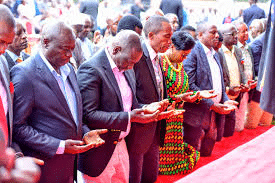
In Kenya, the church has historically played a pivotal role in shaping the nation’s political landscape. As a deeply religious society—with over 80% of the population identifying as Christian—religious institutions and leaders wield considerable influence not only on moral and social issues but also on political discourse and governance. The intersection of faith and politics in Kenya is complex, involving advocacy for justice, peacebuilding, and social welfare, alongside moments of political endorsement and critique. Understanding the church’s role in Kenya’s politics today requires an examination of its historical contributions, contemporary influence, and the challenges it faces in balancing spiritual authority with political engagement.
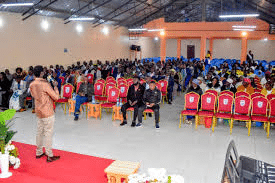
The church’s involvement in Kenya’s political evolution dates back to the colonial era. Christian missionaries were among the first institutions to introduce formal education and social services, which indirectly laid the foundation for political consciousness. Prominent church leaders and institutions became centers for anti-colonial activism. For instance, Archbishop John William Arthur and other clergy provided platforms for nationalist leaders such as Jomo Kenyatta to articulate visions of independence. The church thus played a dual role: nurturing spiritual life and fostering the early seeds of political mobilization.
Post-independence, the church continued to influence national affairs. During the repressive regimes of Presidents Jomo Kenyatta and Daniel arap Moi, churches often became safe spaces for dissent and advocacy for human rights. Notably, the Catholic Church and the National Council of Churches of Kenya (NCCK) were vocal critics of authoritarianism, corruption, and electoral malpractice, acting as moral watchdogs. The churches’ involvement in the 1990s pro-democracy movement was instrumental in the eventual introduction of multiparty politics in 1992.
In the 21st century, the church remains a key player in Kenya’s political arena, though its role has become more nuanced and sometimes contentious. Churches wield influence through various channels: sermons that discuss governance and ethics, voter education campaigns, peacebuilding initiatives, and direct engagement with political leaders.
One significant contribution is the church’s role in promoting peace and reconciliation, especially during electoral periods often marred by violence. The 2007-2008 post-election violence, which resulted in over 1,100 deaths and displaced hundreds of thousands, underscored the need for peacebuilding actors. Churches, including the Catholic Church, the Anglican Church, and evangelical groups, led mediation efforts and promoted healing dialogues, complementing the work of international mediators. The National Council of Churches of Kenya (NCCK) and the Kenya Conference of Catholic Bishops (KCCB) were particularly active in calling for peaceful elections and respect for human rights.
Additionally, churches have been involved in voter education and civic engagement programs, aiming to inform congregants about their rights and responsibilities. These efforts encourage ethical voting based on candidate integrity and policies rather than ethnic allegiance or patronage. For example, organizations like the Faith-based Organizations Network on HIV/AIDS (FONAH) have expanded their mandate to include democracy and governance education.
The church also influences policy debates, especially on social issues such as family values, gender rights, and poverty alleviation. Religious leaders often use their platforms to advocate for moral governance, transparency, and social justice. In recent years, churches have voiced concerns on issues like corruption, environmental degradation, and the rights of marginalized communities, urging politicians to uphold the common good.
Despite its positive contributions, the church’s involvement in politics is not without controversy. Some critics argue that certain churches or clergy have aligned too closely with political figures, compromising their prophetic and independent voice. Political endorsements by religious leaders during elections can polarize congregations and politicize faith, potentially undermining the church’s unity and spiritual mission.
Moreover, the rise of Pentecostal and evangelical churches has introduced new dynamics. Some charismatic pastors wield substantial political influence through large congregations and media networks, sometimes blurring the line between spiritual leadership and political ambition. This has raised concerns about the commercialization of religion and the manipulation of faith for political gain.
Another challenge is maintaining the church’s credibility amid Kenya’s ethnic politics. Given that political loyalties often map onto ethnic identities, churches must navigate carefully to avoid fueling divisions or being perceived as partisan actors. The church’s effectiveness as a unifying force depends on its ability to transcend ethnicism and promote inclusive national identity.
The future role of the church in Kenya’s politics will likely continue to evolve. There is increasing recognition among religious leaders of the need for constructive engagement that balances spiritual integrity with social responsibility. The church’s moral authority positions it uniquely to advocate for democratic deepening, good governance, and social cohesion.
Collaborations between churches, civil society, and government agencies are expanding, focusing on electoral reforms, anti-corruption campaigns, and youth empowerment. For instance, during the 2022 general elections, faith-based organizations participated actively in voter sensitization and violence prevention, reflecting a maturing role in Kenya’s democratic processes.
Furthermore, the church’s influence extends beyond national borders through regional and ecumenical bodies like the All Africa Conference of Churches (AACC), which promotes peace and democracy across the continent. Kenya’s churches often draw on these networks to strengthen their advocacy and share best practices.
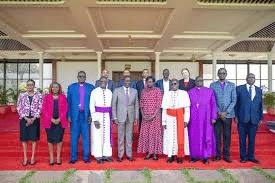
The church remains a vital force shaping Kenya’s political landscape. From its historical role in the liberation struggle to contemporary peacebuilding and governance advocacy, the church has contributed significantly to Kenya’s democratic journey. While challenges such as political partisanship and ethnic tensions persist, the church’s potential as a moral compass and agent of social transformation endures. As Kenya continues to navigate complex political and social changes, the church’s engagement—rooted in faith, justice, and reconciliation—will be crucial in promoting inclusive and peaceful governance.
About The Author