



Kenya has emerged as the leading country in electricity access and consumption within the East African Community (EAC), reflecting its robust economic performance and increasing energy demand. According to data from the Kenya National Bureau of Statistics (KNBS), the Energy and Petroleum Regulatory Authority (EPRA), and the World Bank, Kenya recorded a peak electricity demand of 2,316 megawatts (MW).
In comparison, Tanzania followed with a peak demand of 1,944 MW, while Uganda stood at 1,176 MW. Rwanda and Burundi recorded lower demands of 262 MW and 70 MW, respectively. Notably, all EAC member countries reported growth in electricity demand, except for the Democratic Republic of Congo (DRC) and Burundi.
The growth in Kenya’s electricity usage is closely tied to its expanding economy, projected to reach a gross domestic product (GDP) of 124.5billionin2024,upfrom124.5 billion in 2024, up from 124.5billionin2024,upfrom108.4 billion in 2023. This increase in power consumption is attributed to heightened industrialization, infrastructure development, and improved household access to electricity.
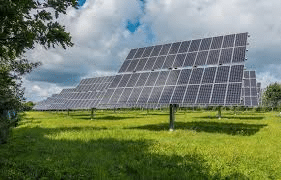
Kenya’s sustained investment in renewable energy sources—including geothermal, wind, and solar—has played a significant role in its energy success. These investments have bolstered the country’s capacity to meet rising energy demands.
In comparison, Tanzania’s GDP is expected to grow from 78.8billionto78.8 billion to 78.8billionto79.06 billion, while Uganda’s economy will expand from 53.65billionto53.65 billion to 53.65billionto67.01 billion. Rwanda and Burundi lag behind at 14.33billionand14.33 billion and 14.33billionand2.63 billion, respectively.
Interestingly, despite its substantial population and abundant natural resources, the DRC experienced a decrease in power demand, registering 2,174 MW. The DRC’s real GDP growth has also slowed to 4.7 percent, highlighting ongoing structural challenges in its energy and industrial sectors.
Kenya’s leadership in energy demand and GDP emphasizes the connection between electricity access and economic productivity. The report notes that “all countries in the EAC region registered growth in peak demand except DRC and Burundi,” underscoring how energy use reflects regional economic trends.
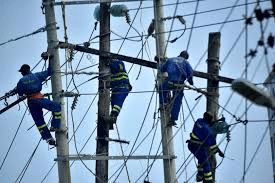
As Kenya’s energy appetite continues to grow, further investments in generation, transmission, and distribution infrastructure are expected. The government’s focus on expanding access to clean and reliable power has been crucial in driving economic activity across both urban and rural areas.
Overall, the data highlights Kenya’s position as a regional economic powerhouse, supported by strong performance in key sectors such as manufacturing, transport, and services—all of which are heavily reliant on electricity. The report concludes that Kenya’s energy and economic trajectory illustrates the growing interdependence between power consumption and GDP growth in East Africa.
About The Author