



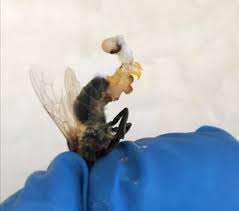
During mating flights, a virgin queen honey bee goes to a designated area where numerous male drones await her arrival. She will mate with several drones in flight. As a male drone mounts the queen, he inserts his endophallus and releases his semen. After mating, the drone detaches from the queen, but his endophallus remains inside her, tearing from his body.
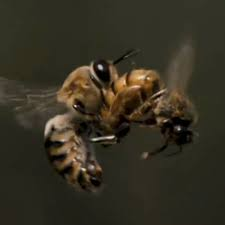
The next drone that mates with the queen will remove the previous endophallus, losing his own in the process. Drones can mate only seven to ten times during a single mating flight, and after mating, they quickly die due to the tearing of their abdomen when their endophallus is removed. Even those that survive the flight are expelled from the hive shortly afterward, as their primary role of mating has been fulfilled.
Virgin queens typically engage in a single mating flight early in their lives. After mating with several drones on this flight, a queen can store up to 100 million sperm in her oviducts, though only five to six million are held in her spermatheca, where fertilization occurs. The queen utilizes only a small number of these sperm to fertilize her eggs throughout her lifetime. If she exhausts her supply of stored sperm, new queens from future generations will need to mate and establish their own colonies.
Queens also have the ability to determine the sex of their offspring: as eggs move from the ovaries to the oviduct, the queen can choose whether to fertilize them. Unfertilized eggs will develop into drones, while fertilized ones will become female workers or queens. Worker bees do not mate but can lay unfertilized eggs, which will still develop into male drones.
Queens lay their eggs in oval-shaped cells attached to the hive’s ceiling. Worker bees provide these cells with royal jelly to support the larvae. Future workers receive royal jelly for the first two days of their larval stage, whereas queens are fed royal jelly throughout their entire development. The time it takes for bees to mature varies by caste: male drones require 24 days to develop from egg to adult, workers take 21 days, and queens only need 16 days.
About The Author