



China has officially commenced construction on the Yarlung Tsangpo river, set to become the world’s largest hydropower dam, a project that has sparked significant concerns from India and Bangladesh. Premier Li Qiang presided over the ceremony marking the start of this ambitious endeavor, which is anticipated to generate three times more energy than the current largest dam, the Three Gorges.
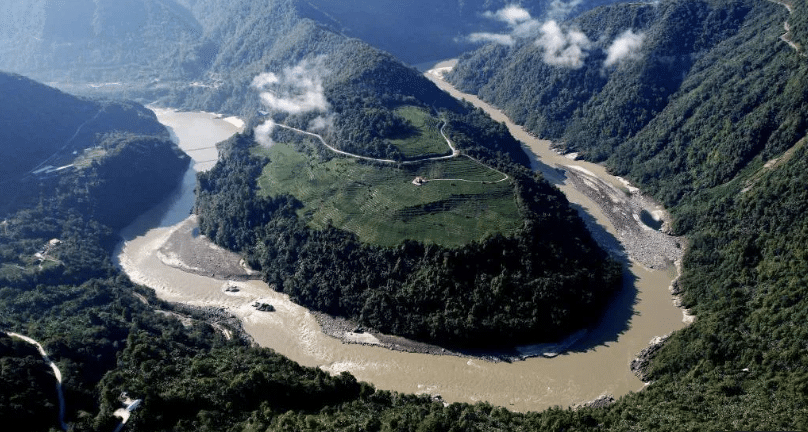
The $12 billion project has drawn criticism due to its potential impact on millions of residents in India and Bangladesh living downstream, as well as the local Tibetan environment. Critics fear that the dam could give China control over the river, which flows into India’s Arunachal Pradesh and Assam states, eventually feeding into the Siang, Brahmaputra, and Jamuna rivers.
Arunachal Pradesh Chief Minister Pema Khandu has voiced concerns that the dam could lead to significant water shortages, threatening the livelihoods and existence of local tribes. He warned that sudden water releases from the dam could devastate communities along the Siang river, describing it as a potential “water bomb.”
India’s federal government has previously communicated its concerns to China, highlighting the risks the dam poses to downstream communities. In response, China has asserted its “legitimate right” to dam the river while claiming to consider downstream impacts.

Bangladesh has also expressed apprehension, requesting more information from China about the project. The dam’s construction occurs in a region known for its steep valleys and deep canyons, with plans to drill multiple 20km tunnels to divert the river.
Chinese state media report that the electricity generated will primarily serve eastern metropolises, while also addressing regional needs. However, activists argue that such projects exploit Tibetan land and resources. Past protests against similar initiatives have been met with heavy repression, including arrests and violence.
Environmental concerns are also significant, as the flooding of Tibetan valleys could threaten biodiversity and pose risks in a seismically active region. As construction progresses, the implications for the region’s ecology and downstream populations remain a critical issue.
About The Author